
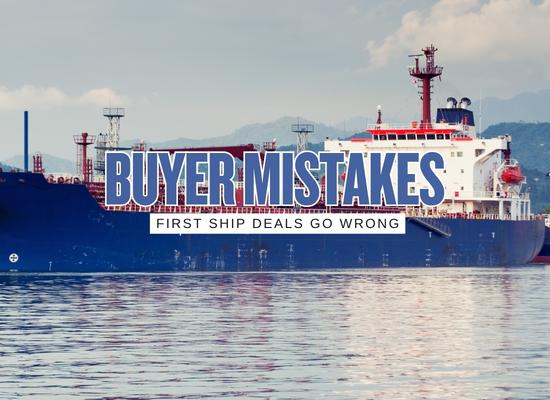

Volatile shipping markets can make first-time buyers feel like they need to move fast, but that pressure is exactly where expensive mistakes begin. In a choppy environment, prices move quickly, charter sentiment shifts, lenders get selective, and a vessel that looked workable under one earnings assumption can look far less attractive a few months later. That matters even more now because the market is not dealing with freight volatility alone. Buyers also have to weigh environmental compliance, emissions-cost exposure on some trades, ballast water obligations, and the operating implications of EEXI and CII rules for existing ships. UNCTAD said maritime trade growth slowed sharply in 2025 and highlighted rising uncertainty and cost pressure across the sector, while the IMO and EU frameworks continue to shape how ships are employed, financed, and valued.
Volatility creates two illusions at the same time. It makes every vessel look urgent, and it makes every strong month feel permanent. That combination is especially dangerous for a new buyer who has not yet lived through a softening freight market, a difficult drydock, a delayed charter, or a lender changing its tone halfway through a deal.
The first smart move is to slow the decision down mentally, even when the market feels fast.
| Buyer instinct | Why it feels right | Why it goes wrong |
|---|---|---|
| Move quickly before prices rise | Fear of missing the window | Weak diligence and overpayment |
| Underwrite on recent rates | Fresh earnings look persuasive | Breakeven collapses when the market normalizes |
| Focus on purchase price | Headline number looks attractive | Real cost emerges in repairs, compliance, and downtime |
| Assume financing will stay available | Deal momentum feels strong | Credit terms tighten or leverage disappoints |
| Treat regulation as a side issue | Technical details feel secondary | Commercial flexibility and future value suffer |
First-time buyers often look at the latest strong market and assume that is the earnings base. In volatile markets, that is one of the fastest ways to overpay. A vessel should be tested against weaker periods, not just favorable ones. If the deal only works when the market stays hot, the buyer is not really buying a ship. They are buying a mood.
Volatile markets reward preparation, not panic. New buyers often think experienced owners win because they move faster. In many cases, experienced owners win because they already know what they will not buy. Speed without a filter is not an edge. It is usually how people skip the uncomfortable questions that matter most.
A cheap ship can be an expensive lesson. The real acquisition cost includes drydock timing, steel work, machinery attention, class items, ballast water obligations, fuel-performance realities, and off-hire risk. New buyers often focus on the discount instead of asking why the discount exists.
Compliance is no longer a detail that sits quietly in the background. It can affect charter attractiveness, operating profile, capex timing, and resale liquidity. First-time buyers sometimes assume they can solve regulatory issues later, but later often arrives as reduced commercial flexibility or a bigger bill than expected.
Some vessels are good cash flow assets. Some are asset-trading plays. Some are neither. First-time buyers often mix these ideas together and assume a ship with decent current earnings will also have strong resale support later. That is not always true. A vessel can earn reasonably well and still disappoint badly on exit.
In volatile conditions, financing can change tone quickly. A buyer may like the ship, but the lender may question its age, liquidity, compliance burden, or downside collateral value. First-time buyers often model the transaction first and validate financing second. Strong buyers do the opposite.
A ship is only commercially attractive if people actually want to employ it. New buyers sometimes focus on theoretical earning power instead of practical charterer acceptance. The market can be telling you a lot through silence. If charterers are hesitant, the vessel may deserve a lower value than spreadsheet logic suggests.
Many first-time buyers think carefully about the entry point and only vaguely about the exit. In a volatile market, the resale window can close quickly, the buyer pool can narrow, and financing appetite can weaken. If there is no believable future buyer story, the current purchase needs even more discipline.
Volatile markets punish tight structures. If the deal depends on near-perfect utilization, minimal off-hire, supportive rates, easy refinancing, and no surprise capex, the buyer has built a fragile position. First-time owners often underestimate how many small problems can arrive in a short period.
Buying the ship is not the finish line. It is the starting point. New buyers sometimes spend enormous energy on the transaction and too little on technical management, crewing, commercial strategy, insurance, sanctions controls, or internal reporting discipline. In a volatile market, operational weakness shows up very quickly in results.
The best first purchase is rarely the most exciting one. It is usually the ship with understandable condition, realistic commercial employability, manageable compliance exposure, acceptable financing support, and a structure that can survive a market disappointment.
In other words, a first-time buyer should often be trying to stay in the game, not trying to win the cycle on the first swing.
- Would this deal still look acceptable if rates softened materially within six months
- Do I understand the next survey and drydock with enough confidence to budget it honestly
- Would a lender and an insurer stay comfortable if the market cooled
- Can the vessel attract the kind of charterers I actually want to work with
- Am I buying a ship I can manage well, not just a ship I can acquire
- Could I explain the exit story clearly to someone skeptical
Use this quick tool to see whether your target ship and structure look resilient enough for a volatile market.
Volatile markets do create opportunities, but they also expose weak assumptions very quickly. The safest first deal is usually not the one with the most dramatic upside story. It is the one that stays understandable when the market gets less friendly.
For a first-time ship buyer, discipline is usually more valuable than bravery.
cialis in turkey
cialis in turkey
cialis street price
cialis street price
sildenafil viagra review
sildenafil viagra review
orlistat reddit
orlistat reddit
famotidine treat anxiety
famotidine treat anxiety
semaglutide dosage reddit
semaglutide dosage reddit
ivermectin knowledge base
ivermectin knowledge base
minoxidil 2% vs 5% clinical evidence
minoxidil 2% vs 5% clinical evidence
minoxidil foam vs liquid performance data
minoxidil foam vs liquid performance data
avanafil contraindication considerations
avanafil contraindication considerations
avanafil online safety protection
avanafil online safety protection
avanafil serious adverse effects
avanafil serious adverse effects
Peak Window Learning Center
Peak Window Learning Center
Sildenafil Onset Delay Resource
Sildenafil Onset Delay Resource
Variability Interpretation Guide
Variability Interpretation Guide
guide to how sildenafil works
guide to how sildenafil works
this erectile dysfunction guide
this erectile dysfunction guide