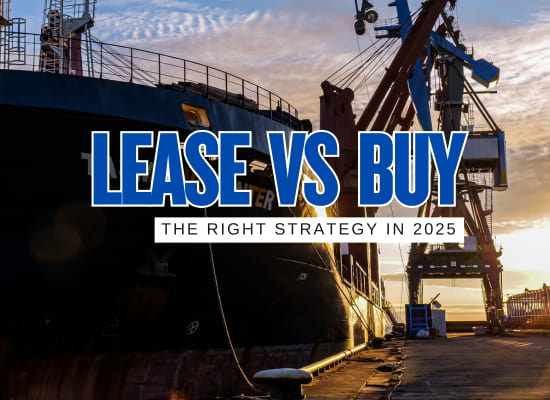

In 2025, the maritime industry is at a pivotal juncture. Global trade dynamics, environmental regulations, and technological advancements are reshaping decisions around fleet acquisition. Shipowners and operators face a critical choice: to buy or to lease?
📈 The Case for Buying Ships in 2025
Owning a vessel offers unparalleled control and potential long-term financial benefits. However, it also comes with significant responsibilities and risks. Here’s a breakdown:
✅ Advantages of Purchasing
- Full Operational Control: Ownership allows for complete autonomy over vessel operations, including route planning, maintenance schedules, and crew management. This control can lead to optimized operations tailored to specific business needs.
- Asset Appreciation Potential: In certain market conditions, ships can appreciate in value, offering potential capital gains upon resale. This is particularly true for vessels that are well-maintained and equipped with modern, eco-friendly technologies.
- Customization: Owners can retrofit or upgrade vessels to meet specific requirements, such as installing advanced navigation systems or modifying cargo holds to accommodate specialized goods.
- Long-Term Cost Savings: Over an extended period, owning a ship can be more cost-effective than leasing, especially when considering the cumulative costs of long-term charters.
❌ Disadvantages of Purchasing
- High Capital Expenditure: Acquiring a vessel requires substantial upfront investment, which can strain financial resources and limit liquidity.
- Market Volatility Risks: The shipping industry is susceptible to fluctuations in freight rates, fuel prices, and global trade volumes. Owners bear the brunt of these market risks.
- Maintenance and Compliance Costs: Owners are responsible for all maintenance, repairs, and ensuring compliance with international regulations, which can be both time-consuming and costly.
- Depreciation: Vessels depreciate over time, and technological advancements can render older ships less competitive or even obsolete, affecting resale value.
🌐 Market Outlook: Factors Influencing Buying Decisions in 2025
Several key trends are shaping the decision-making landscape for potential ship buyers:
- Environmental Regulations: Stricter International Maritime Organization (IMO) regulations are pushing for reduced emissions, necessitating investments in greener technologies. Owners must consider the costs of retrofitting existing vessels or purchasing new, compliant ships.
- Technological Advancements: The rise of digitalization, automation, and alternative fuels is transforming ship design and operations. Investing in modern vessels equipped with these technologies can offer competitive advantages but also requires significant capital.
- Financing Challenges: While interest rates remain relatively low, securing financing for ship purchases can be challenging, especially for smaller operators. Lenders are increasingly scrutinizing the environmental credentials and profitability projections of shipping ventures.
- Geopolitical Factors: Trade tensions, such as those between major economies, can impact shipping routes and demand. Owners must be prepared to adapt to shifting trade patterns and potential regulatory changes.
Purchasing a ship in 2025 offers both opportunities and challenges. While ownership provides control and potential financial benefits, it also demands significant investment and exposes owners to various risks. The decision to buy should be based on a thorough analysis of market conditions, financial capacity, and long-term strategic goals.
🚢 Leasing Ships in 2025: Flexibility Amid Uncertainty
As 2025 unfolds, geopolitical shifts, decarbonization mandates, and an unpredictable freight market are pushing many operators toward leasing as a strategic alternative to purchasing. Chartering or leasing a vessel can offer flexibility and capital efficiency, but it’s not without trade-offs. Here’s a closer look at the current leasing landscape and its pros and cons.
✅ Advantages of Leasing Ships in 2025
- Lower Upfront Costs
- Leasing requires significantly less capital than purchasing, making it attractive for operators with limited access to financing or those entering new markets.
- Greater Flexibility
- Leasing allows companies to scale up or down based on market demand. Operators can lease a vessel for a specific route, season, or contract term and avoid long-term asset commitments.
- Access to Modern, Eco-Compliant Ships
- Many lessors are investing in new, environmentally compliant ships (e.g., LNG-powered, hybrid, or low-carbon vessels). This gives lessees access to IMO-compliant tonnage without needing to invest in green retrofitting.
- Reduced Maintenance Liability
- In many time charter agreements, the lessor remains responsible for major repairs and regulatory compliance, relieving lessees of the maintenance burden.
- Easier Exit Strategy
- When a lease ends, the ship simply goes back to the owner. This is ideal for short-term projects, volatile routes, or operators testing new markets.
❌ Disadvantages of Leasing Ships in 2025
- Higher Long-Term Costs
- Over time, leasing a vessel can be more expensive than owning, especially during long-term contracts. Continuous lease payments may outweigh the benefits of avoiding upfront capital outlay.
- Limited Customization
- Leased vessels typically can’t be heavily modified. This limits operational efficiency if specific onboard configurations or technologies are needed.
- Less Control
- Charter agreements may impose restrictions on routes, cargo, or performance metrics. Operators may not have the full autonomy they would with owned vessels.
- Exposure to Market Tightness
- When ship demand surges, such as during port congestion or post-pandemic recovery periods, charter rates can spike dramatically. In 2021–2022, daily charter rates for some container vessels increased 3–5x during tight leasing markets—a risk lessees must factor in.
- Reputation Risk with Older Tonnage
- Leasing older, cheaper vessels may conflict with a company’s ESG commitments or lead to operational disruptions if the ship fails to meet modern compliance standards.
🔍 Market Trends Impacting Leasing in 2025
- Shift to Short-Term Charters
Due to global instability and trade unpredictability, more lessees are opting for short-term or flexible leasing contracts. This shift gives rise to new opportunities but increases competition for newer vessels. - Environmental Pressure on Lessors
Leasing companies are rapidly upgrading fleets to meet decarbonization targets. Vessels with green tech like wind-assisted propulsion or biofuel capability are commanding premium charter rates. - Alternative Leasing Models Emerging
New options like “pay-per-use” charters, hybrid ownership models, and digital leasing marketplaces are making it easier to access vessels with minimal long-term risk. - Asia-Pacific Driving Leasing Growth
Major demand for leased ships is now coming from Southeast Asian and Indian operators expanding intra-Asia and Middle East trade routes, contributing to tighter vessel supply.
Leasing offers a strategic advantage in an uncertain environment. It allows ship operators to remain agile and operational without being locked into asset-heavy commitments. However, rising charter costs, compliance issues, and long-term expense implications make it crucial to time and structure leasing arrangements wisely.
⚖️ Wins in 2025 — Buying or Leasing?
In 2025, there is no universal “winner” between buying and leasing ships. The best option depends heavily on your financial strategy, operational goals, fleet needs, and market outlook. However, based on current trends, we can draw some clear conclusions.
📊 Who Should Consider Buying?
Buying is strategically advantageous if you:
- Have stable cash flow and long-term operational plans
- Require full control over ship configuration, maintenance, and deployment
- Are confident in your ability to navigate freight rate cycles and fuel price volatility
- Want to build asset value or resell at a future profit
- Are investing in modern, eco-compliant vessels that may rise in value
✅ Best for: Established shipping firms, vertically integrated logistics companies, and long-term cargo carriers with strong capital reserves
🔁 Who Should Consider Leasing?
Leasing is ideal if you:
- Need to enter or exit markets quickly
- Want to test routes or contracts without long-term commitments
- Lack access to large-scale financing or wish to preserve capital
- Need immediate access to green-compliant or tech-enhanced ships
- Prefer a lighter operational footprint or less regulatory overhead
✅ Best for: New market entrants, smaller operators, cargo brokers, or logistics players seeking flexibility
🧭 2025 Market Insights & Final Verdict
- Environmental compliance is the #1 cost driver this year. If you’re not investing in new green tech, leasing a compliant vessel may be safer and faster.
- Freight rate volatility continues to punish those with fixed costs and reward the nimble. Leasing supports that agility.
- Financing is tightening globally, especially for fossil-fuel-heavy assets. This makes leasing more appealing short term.
- However, buying modern vessels with dual-fuel capability or AI-enabled efficiency systems may yield strong long-term ROI, especially as carbon pricing expands globally.
🏁 The 2025 Winner?
Leasing edges out buying for most operators in 2025, thanks to its flexibility, lower upfront risk, and ability to stay compliant in a rapidly evolving landscape.
That said, for well-capitalized owners with long-term contracts and ESG-aligned vessel investments, buying remains the more profitable move over a 10–20 year horizon.