
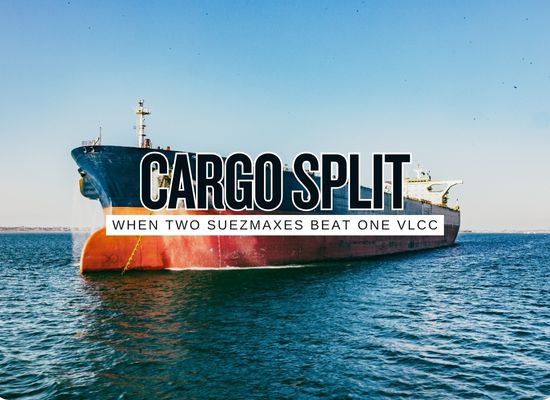

A record VLCC lump sum can make two smaller ships look smarter
A $29.5 million US Gulf-China VLCC fixture changes the cargo decision. At that level, the cheapest answer may not be the biggest ship. It may be the cleanest split between freight cost, timing, port access, cargo risk and charterer control.
The normal VLCC advantage is scale. One ship, one fixture, one loading plan, one discharge plan, and the lowest cost per barrel when tonnage is available. That advantage weakens when the VLCC position list gets thin and owners can force the lump sum toward record territory.
Splitting the cargo across smaller ships starts to make sense when two Suezmaxes can move the same crude for less money, earlier loading, lower waiting risk, or better destination flexibility. It stops making sense when the second ship adds too much delay, demurrage, terminal cost, inspection burden or cargo-handling complexity.
Split the stem when two Suezmaxes cost less than one VLCC after extra port costs, demurrage risk, scheduling friction, inspection, STS or blending cost, and the value of faster delivery are included.
Seven times smaller ships can beat the VLCC
At $29.5 million, the clean break-even is $14.75 million per Suezmax. If two ships fix below that after extras, splitting wins on freight math.
A tight position list can turn the “right” VLCC into the late VLCC. Two available Suezmaxes may protect the loading window.
Two ships can discharge at different Chinese ports, stagger arrivals, or protect refinery scheduling better than one large delivery.
If the VLCC needs lightering, STS, partial discharge, or a less efficient terminal plan, the scale advantage shrinks quickly.
One VLCC delay can trap the whole stem. Two Suezmaxes split operational risk, although they also double the number of moving parts.
If VLCC owners are pushing higher but Suezmaxes have not fully caught up, the split window may be short but valuable.
One VLCC is cleaner. Two Suezmaxes can be more flexible. In a volatile tanker market, flexibility can be worth real money.
VLCC versus split Suezmax economics
| Choice | Cargo moved | Freight logic | Hidden cost | Best use case |
|---|---|---|---|---|
| One VLCC Single large lift |
About 270,000 mt or roughly 2 million barrels. | Usually strongest scale economy when VLCC supply is normal. | High lump sum, scarce tonnage, concentrated delay risk. | Clean ports, available ship, strong scale economics. |
| Two Suezmaxes Split stem |
Two roughly half-size cargoes. | Can beat a record VLCC rate if each ship fixes below break-even. | Two fixtures, two inspections, two arrivals, more coordination. | Tight VLCC list, better Suezmax availability, flexible discharge plan. |
| Three Aframaxes More fragmented split |
Three smaller stems, depending on crude and ports. | Usually only works if port limits or timing make larger ships impractical. | Higher coordination burden and more terminal events. | Port restrictions, regional moves, staged delivery or special cargo program. |
| Delay and demurrage Decision swing factor |
Same crude can have different landed economics. | Cheaper freight can vanish if the split adds delay. | Laytime, berth congestion, inspection, blending and STS exposure. | Only split when operational execution is tight. |
Commercial read
The split is not about proving Suezmaxes are better than VLCCs. It is about recognizing the moment when VLCC scarcity becomes expensive enough that smaller tonnage can buy back leverage for the charterer.
Split-cargo decision calculator
Use this tool to test when two Suezmaxes beat one VLCC on a US Gulf-China style crude movement.
VLCC vs Two Suezmax Charter Cost Tool
Adjust the lump sums, cargo size and added split costs to estimate the better move.
Model note: This is a commercial screening tool. Actual fixture economics depend on crude grade, laycan, port restrictions, berth availability, war risk, canal routing, vetting, demurrage, STS exposure, terminal fees, broker commissions and charter-party terms.
Charterer checklist before splitting the stem
| Check | Split helps when | Split hurts when | Decision move |
|---|---|---|---|
| Freight spread | Two Suezmaxes fix below the VLCC break-even. | Suezmax owners quickly reprice after VLCCs spike. | Lock both ships before assuming savings. |
| Laycan | Smaller ships can meet the loading window. | The second ship arrives late and creates cargo timing risk. | Value the schedule, not just the freight quote. |
| Load port | Terminal can handle two stems cleanly. | Extra berthing, inspection or line time creates delay. | Confirm terminal windows before fixing. |
| Discharge plan | Two arrivals improve refinery or port flexibility. | The receiver wants one large, simple delivery. | Ask the receiver what flexibility is actually worth. |
| Cargo quality | Split parcels stay clean and separately documented. | Mixing, blending, sampling or STS creates claim risk. | Build a cargo-quality evidence file. |
| Demurrage | Risk is spread across two hulls. | Two ships double exposure to port delays. | Run demurrage stress cases before choosing. |
The VLCC is still the default long-haul crude machine. But when the lump sum reaches record levels and the position list is tight, charterers should price two Suezmaxes before accepting that the biggest ship is still the cheapest ship.
Final read
A $29.5 million VLCC voyage turns cargo splitting from a backup idea into a real freight strategy. The split makes sense when two Suezmax fixtures beat the VLCC after added port, delay, demurrage, inspection and coordination costs. It fails when operational friction eats the headline savings. The clean decision is not VLCC versus Suezmax by habit. It is one large freight bill versus two smaller freight bills with execution risk fully priced.